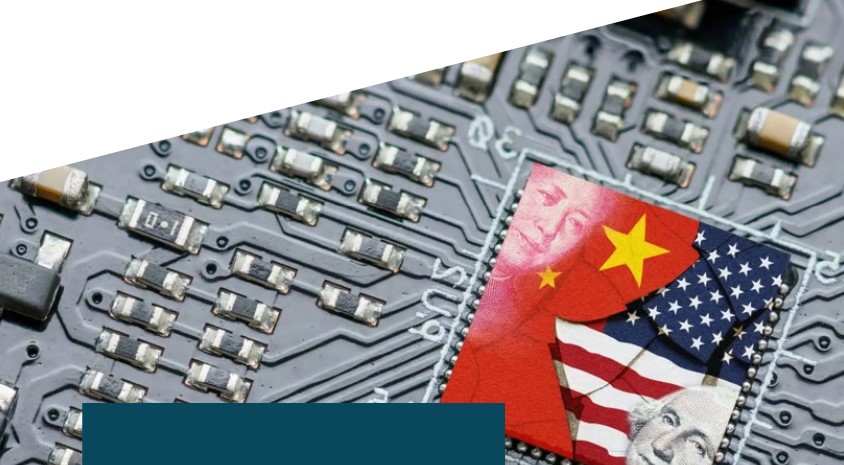
The affinity between the United States and China has been unsteady; both have had the most critical and complex bilateral relationship throughout history. This affiliation is growing worse over the years, especially when China started gaining ground in competition over the dominant position in the global economy and political system. In this digital age, the game between the two countries is more than just a trade war. Recently, technology has become the core issue of the rivalry between the US and China, and even the term Tech War has been formalized in official US documents (Danilin, 2021). In this article, I argue that the US-China Technology War has significantly strengthened China’s technological existence in Global South, which led to a more considerable opportunity to reduce the digital divide within South countries.
Rizky Alif Alfian
While the rest of the world largely returned to everyday life in 2021, this is not the case in China. While the country was celebrated as one of the “successful” countries in combating the COVID-19 pandemic, many of its cities remain in lockdown two years into the pandemic. While there is growing discontent with this policy, the Chinese government has insisted that the zero-COVID policy is the best policy to handle the pandemic in China. The appointment of Li Qiang, the Party Secretary of Shanghai during the brutal COVID-19 lockdown in early 2022 that harmed the economy, in the 20th National Congress of the Chinese Communist Party as the next premier of China has proven that Xi Jinping has doubled down on China’s continued application of the zero-COVID policy (BBC News 2022).
Kemajuan teknologi komunikasi membawa masyarakat untuk masuk ke dalam situasi yang disebut dengan hiperkonektivitas (hyperconnectivity). Hiperkonektivitas adalah keadaan di mana masyarakat selalu terhubung dan dapat berinteraksi dengan siapa saja melalui teknologi, bisa mengakses berbagai macam teknologi komunikasi kapan saja dan di mana saja, kaya akan informasi yang bahkan melebihi kapasitas konsumsi seseorang, serta selalu merekam berbagai aktivitas yang dijalani, baik secara daring maupun luring (Fredette, dkk, 2012). Hiperkonektivitas memiliki dampak yang spesifik dan unik pada kelompok masyarakat tertentu. Salah satunya adalah kelompok keagamaan di Indonesia, negara religius yang jumlah penetrasi telepon genggam lebih besar daripada jumlah penduduk secara keseluruhan (We Are Social, 2015, dalam Epafras, 2016).
Pandemi Covid-19 di Indonesia telah terjadi hampir lebih dua tahun dan masih belum akan selesai di waktu yang dekat ini. Di Indonesia, salah satu perubahan yang paling menonjol adalah cara pandang antar sesama, khususnya pandangan negatif terhadap individu yang terinfeksi Covid-19 (penyintas). Fenomena tersebut tentu saja menimbulkan perasaan negatif seperti cemas, depresi, stres, dan ketidakpercayaan diri, yang secara tidak langsung berimplikasi terhadap kesehatan mental. Permasalahan stigma kesehatan telah banyak terjadi sebelum Covid-19 muncul, seperti yang muncul pada penyintas kanker prostat, kanker payudara, HIV-AIDS dan penyakit lainya. Berbagai penyintas penyakit tersebut masih merasakan diskriminasi karena stigma yang melekat pada diri mereka. Teknologi Informasi dan Komunikasi (TIK) sebenarnya hadir menjadi jawaban dari permasalahan di atas, khususnya dalam mendorong agar para penyintas dapat kembali hidup seperti semula tanpa ada perasaan negatif karena stigma. Artikel ini fokus pada bagaimana hadirnya komunitas dukungan online dapat menjadi wadah bagi penyintas untuk bersosialisasi, terutama di tengah stigma dan isolasi yang mereka hadapi. Tulisan ini ingin mengeksplorasi komunitas dukungan online dan implikasinya bagi kesehatan individu.